
I attended an interesting event last week, which was a little outside of my normal stomping grounds. Digital Infrastructure North 26 was about, er, digital infrastructure. In the north. It was a definite shift away from my usual startup and business development sessions. It re-activated some old pathways in my brain, and I want to talk about it.
The day had three broad themes, though presentations happily wandered away from them. In my words, not the organisers, the three themes were: connectivity, data centres, and digital placemaking. This is the first article of a mini-series about these, focussing on connectivity.
Remember, this day was about infrastructure; implementing it, using it; taking advantage of it. This triggered old instincts for me – many, many years ago, I managed a project called Project ACCESS up in Cumbria. This was in The Old Times before broadband for large parts of the country, and the project was an intervention to get all exchanges in Cumbria activated for broadband, and also the use of wireless technologies to expand the coverage out to (from memory) 95% of properties in this very rural and challenging (read: hilly) county.
So I understand the arguments for public investment in digital infrastructure – been there, done that, went to Brussels to argue the case with the European Commission. That’s the kind of mindset these infrastructure discussions triggered in me. Yes, my particular project was forever ago, but the principles remain the same.
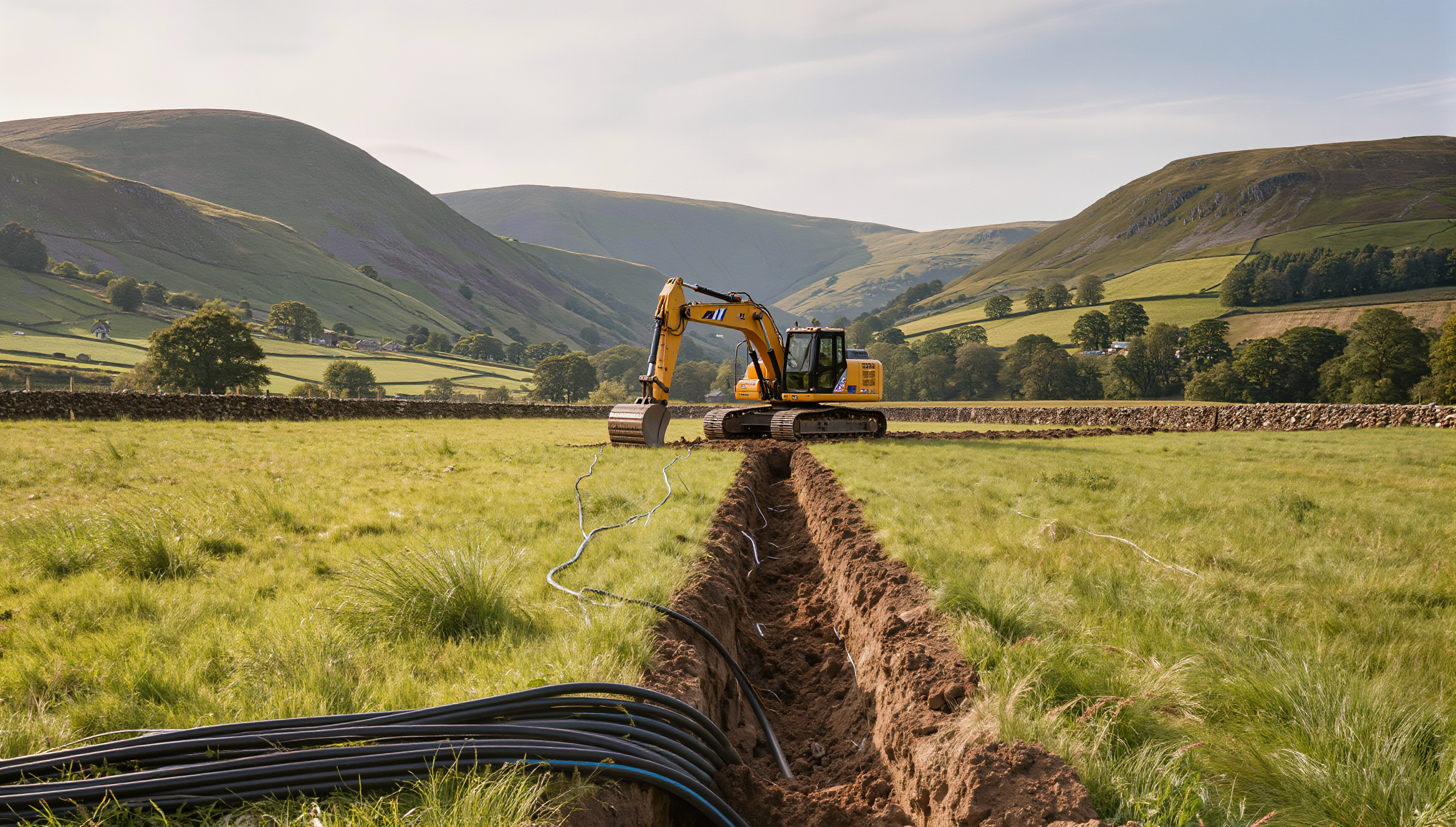
In my view, the position around connectivity was broadly that the two main incumbent network providers, BT and Virgin Media, were not as fast as people would like to meet new demand, and there was a gap for smaller alternative network (“altnet”) operators to step in. This has been the case for quite some time, and speculative altnets have been delivered quite widely across the country, using loans to pay for the expensive bit – digging holes in the ground and putting ducting in place.
The problem has been that a) demand for fibre speeds has not materialised at the volume expected, b) retail and business broadband prices in the UK are very competitive (i.e. margin is small), and c) debt taken out previously has become significantly more expensive as interest rates remembered they could go up.
At least one of the responses to this has been the creation of co-operative or non-profit network sharing organisations. The old idea of vertical integration for the altnets (or, to be more crude, creating a local monopoly) has not been achieved, and that meant innovative ways of bringing in revenue were needed. And, not surprisingly, it turns out that playing nicely with others has the possibility to do that. Essentially, by using a ‘thin layer’ model – cooperative neutral host layer – ISPs can run on top of this physical infrastructure, with a reach across multiple networks. In addition, and crucially, the cooperative model means that public sector organisations can more easily and happily get involved, contributing either fibre networks, or access to physical ducting, and so on.
All in all, a good model, enabling existing assets to be re-used, or expanding their use, for the benefit of the public sector, providers, the wider private sector, and citizens. The only time tricky questions could come up is when the public sector is looking to connect new sites – should they be building new infrastructure or not? Should they be automatically opening up that infrastructure?
This relates to more than just the public sector network need. It also relates to market conditions. If, for example, there is a way of connecting the sites already, such as by using the large incumbent suppliers, does it matter that it is unlikely to be a direct link between the two sites? If the technical need is met, then what would be the justification for putting more physical infrastructure in the ground?
The cooperative network operators are not saying the public sector automatically should build new infrastructure, but that they should open up infrastructure they do have or build more widely. But it is worth asking what the business case would be for building new infrastructure – I am, on the whole, relatively sympathetic to public sector market intervention when it comes to connectivity, because you can fairly easily see that there is a benefit to the physical locality – after all, that’s where at least one end of the connectivity is. But we need to be careful that we aren’t assuming that the lack of infrastructure in a location is due to market failure, rather than there just not being demand.
There are possible reasons for the public sector in a locality building out their own network, to be sure. There may not be connectivity of the speed desired, there could be a desire for extreme ‘sovereign’ control over the infrastructure, or an expectation that demand will continue to expand to the point where procuring the capacity on commercial terms may become excessively expensive (though that last one would be a hard sell in a business case, I suspect). And if you are building it anyway, opening up the duct network in particular (the physical pipes you put the fibre through) makes sense. I am less convinced, given where the market is, on the case of building new infrastructure with a driving factor of providing shared infrastructure though.
Overall, an interesting cooperative model, perhaps forced by market conditions, but with possible benefits. It will be interesting to see how this model develops, particularly if debt servicing costs start to fall dramatically, or if demand for higher bandwidth services becomes more solid.
Next time, I’ll talk about data centres.

Trevor Roberts is a programme and project management consultant and the founder of Dull Industries – a consultancy focused on project turnaround, AI implementation, and digital strategy.
1 thought on “When should the public sector dig its own holes?”