Category: project management techniques

Trust your team

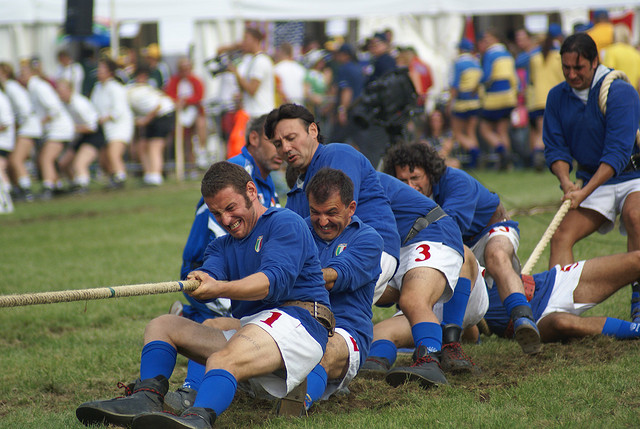
Italian tug of war teamIt’s the people we work with who get projects done, but sometimes we don’t act like it.

When people talk about project management, a lot of the time they only seem to focus on the easy bits – the processes, procedures and methodologies. I don’t mean that these are simple to do, but they can be written down, tweaked, and agreed upon – they are easy to discuss.

What is less simple is team management, which is more important. No matter how good your plan, or how impressive your documentation, if your team aren’t committed to it, or just don’t know about it, then your project will fail.

That’s why I was interested to read two recent articles from Elizabeth Harrin’s blog, A Girl’s Guide To Project Management. They deal with the concept of team coaching, and what team leaders and members can do to help a team work well together.

The articles are an interview with Phil Hayes, and a review of his book. There are some interesting ideas in there, and they are certainly worth a read.

Personally, I think the only thing I’d add (or at least make more explicit) is the importance of trust within a team. All team members, including the nominal leader, need to be able to trust one another. As a project manager, I always try to demonstrate trust in my team by leaving them in peace to get on with assigned tasks, and by treating their concerns seriously.

This doesn’t mean I cross my fingers and hope work gets done – there are still regular update meetings. But this is about making sure everyone on the team knows where we are collectively, and is aware of any issues (and can suggest possible solutions!), and not an adversarial check on what they’ve done.

For my part, I try to show their trust in me is valid by dealing with problems promptly, always being available to help remove obstacles in the path of their work, and most importantly, letting them know I have confidence in them to get the work done.

I find once the team realises the project is a safe, shared environment, they are able to collaborate, and contribute, much more freely and effectively.

What about you? What are your tips for team management?

(Image courtesy of toffehoff. Some rights reserved.)

Technorati Tags: , , , , , ,

Be the Bad Guy

I read an interesting blog post the other day, called How Consensus Decision-Making Creates Shared Direction in a Team. The gist of the article is that for a team to be highly energised and committed to their work, they need to share a sense of direction.

Now, I have to say that I broadly agree with that. When working with a project team, one of the most important things you can do to build that team spirit, and the commitment to work through the problems that will inevitably arise, is making sure everyone knows the end goal, and wants to achieve it.

But I don’t think it is possible to get 100% consensus on every decision, every time. Sometimes it may just be that there isn’t time to go through all the other options to come to the full consensus. This is unfortunate, and if at all possible you should seek to make the time.

Other times, though, it will be because the people in your team also have competing and conflicting aims. The nature of a project team means you are likely to have people from many different areas of the organisation, and some of their aims may be different to the aim of the project.

For example, I recently worked on a project to completely change the way printing was handled across an organisation. The aim of the project was, ultimately, to save the organisation money, by eliminating excess capacity, and expensive processes used. One of the areas of excess capacity was in an internal print unit.

Now, the person who lead the team responsible for the internal print unit had, not unnaturally, a desire to protect her team from any possible cost-savings, and, ultimately, from possible redundancies. This is a perfectly natural desire for a manager who has worked with their team for many years – but it was at odds with the aim of the project.

One way of dealing with this would be to simply exclude that person from the team – if they have a competing goal, it makes no sense for them to be involved, right? But that person was also a source of valuable information about the current situation, the demand they currently deal with, and so forth. For the project to be a success, that information was needed and so, in at least some way, they needed to be part of the team.

So if exclusion is not an option, and you can’t reach consensus on the way forward, what do you do?

Well, then someone has to be the bad guy. Someone has to make the decision about what is the right way forward for the project. That means taking account of concerns about other areas, certainly, but it also means having to make a decision that some in the team may disagree with.

Of course, this is an awful situation to be in for the dissenting member of the team, and it’s important you understand that. But the project is working to provide a benefit to the organisation as a whole, and sometimes that may mean certain parts of that organisation suffer. Someone needs to make the decision to move forward.

It’s not nice, it’s not fun, and I hope it’s not just a desire for alpha male behaviour coming through, but sometimes you have to be the bad guy – and be willing to take the fallout from that.

Technorati Tags: , ,

Project Communications – The Plan

I’ve previously written in some detail about the processes you need to use or adapt in project management, and the steps you need to take to improve the chances of a successful project. But we mustn’t forget that projects end up affecting people, and we need to make sure they are considered as well.

Four weeks ago, I talked about the three broad types of communication we need to consider in our projects – internal, outgoing, and incoming. Three weeks ago, we had a look at the outgoing communications in the project. Two weeks ago, we looked at the internal communications in a project. Last week, we dealt with communications that are incoming to a project.

Today, I want to look at bringing all of this together in a communications plan.

A communication plan needs some thinking about. The easiest part of the plan to deal with is that of outgoing communications. As we’ve already seen, we need to identify:

  • who needs to be kept up to date with what is happening in the project
  • how that information should be presented to them
  • how often that information should be presented, and
  • who has responsibility for making sure this happens

There is more information in this on the post on outgoing communications.

Internal communications also need to be considered in the plan. Now, many of the ways the team communicates internally will already be known, for example through a schedule of update meetings. However, it’s good practice to make sure these are referenced in the plan. Additionally, it is also a good idea to mention in the plan that informal communications are also important, and to encourage people to use them – but to think about how to capture useful ideas or important information afterwards.

Finally, incoming communications should also be covered. There’s no getting away from the fact that these are much more difficult to deal with, and are quite unlikely to come into the project in a structured way. So accept this, but use the plan to formally document the need to be open to these communications, and give the name of someone to whom project team members can take information that comes in like this. This should normally be the project manager.

I must stress that, as I’ve said throughout this mini-series on communications, that the formal methods are very unlikely to be enough. A huge amount of project management revolves around communications, around talking to people and bringing them into the team, around encouraging external suppliers to meet your targets, around making sure your future users know what is happening. Talking is often the best way to do this, but don’t neglect other traditional communications tools, such as posters, newsletters, and so on.

Electronic methods also have their part to play, with email being the one we are most used to. However, don’t neglect social media tools either, if appropriate for your project. You can find out more about those in a series on social media tools for project managers I wrote a while back.

Technorati Tags: , ,

Project Communications – Incoming

I’ve previously written in some detail about the processes you need to use or adapt in project management, and the steps you need to take to improve the chances of a successful project. But we mustn’t forget that projects end up affecting people, and we need to make sure they are considered as well.

Three weeks ago, I talked about the three broad types of communication we need to consider in our projects – internal, outgoing, and incoming. Two weeks ago, we had a look at the outgoing communications in the project. Last week, we looked at the internal communications in a project.

This week, let’s have a look at communications that are incoming to a project.

Incoming communications are, by their nature, the hardest to try to deal with formally. For a start, you can hardly control how and when people are going to try to talk to you! But this isn’t something you should worry about. In fact, you should welcome it.

There are formal methods of gathering incoming communications, of course. For example, it may be that you have a users’ forum, which allows the future users of what you are producing to provide input into the project. Often, if you have a User Representative on a project board, they will be from, or lead, this group.

Far more common, however, are the informal ways of people communicating to the project. Senior management may chat to your Executive, and happen to mention a couple of ideas for the project. Colleagues of members of the project team may offhandedly say something which suggests a lack of understanding about what the project is trying to do.

These type of communications are incredibly valuable to you. They are the real way that the project can learn about how it is seen by the rest of the business, and how the environment the project is working in is changing.

Of course, we need to find some way of making sure these communications aren’t lost. The best way I have found to do this is to ensure that you, as a project manager, communicate regularly with your team. You should encourage them to let you know what reactions they are getting from people outside the project.

It is important to fight the perception that can arise, both in people inside the project and those outside, that the project is somehow a separate entity, something different from the rest of the business. Remember, all the project is trying to do is achieve something that is for the benefit of the organisation it is part of. I’ve worked on projects where the perception of otherness has taken hold, and rapidly gotten out of hand, and it is definitely not somewhere you want to be – it turns into us and them, with all the conflict that implies, far too easily.

So remember, keep talking, to each other, and to the rest of the organisation. Next week we’ll look at building up a system to enable this to happen effectively, a communications plan, and what this should include.

Technorati Tags: , , ,

Project Communications – Internal

I’ve previously written in some detail about the processes you need to use or adapt in project management, and the steps you need to take to improve the chances of a successful project. But we mustn’t forget that projects end up affecting people, and we need to make sure they are considered as well.

Two weeks ago, I talked about the three broad types of communication we need to consider in our projects – internal, outgoing, and incoming. Last week, we had a look at the outgoing communications in the project.

Today, let’s have a look at the communications that happen within a project.

The most obvious example of this type of communication are the dreaded update meetings. I’ve written before about my general dislike for meetings, but they do have value as well. They are a very effective means of communication, so long as we make the best use of them that we can.

But while this is the most obvious example of internal communications, it is far from the only one. Other formal methods of communication also exist, be it in highlight reports from the project manager to the Executive or board, or even in the update reports the project manager receives from team managers or external suppliers.

Often, however, the best forms of communication are those that don’t take place in a formal structure – the quick chat in the corridor, the phonecall to query a couple of details, the email fired off late at night doublechecking something. These communications are a way of making sure that you as project manager know what is happening in the project, and that the people involved in the project all have a good idea of what they are doing.

Yes, if a major issue comes up from these informal chats, it needs to be recorded and captured in a formal way, whether in a risk or issue log, or by adding it into a highlight report. But often these chats, and a little bit of guidance, can prevent minor misunderstandings becoming major problems.

The internal communication of the project is one of the best tools you have as a project manager to keep the project on track, to keep the project team motivated and involved, and to bring the project to a successful conclusion. Importantly, this isn’t done by being blinkered into only using formal methods – it’s the friendly word at the right time that is much more useful.

Next time, we’ll look at incoming communications.

Technorati Tags: , , ,

Project Communications – Outgoing

I’ve previously written in some detail about the processes you need to use or adapt in project management, and the steps you need to take to improve the chances of a successful project. But we mustn’t forget that projects end up affecting people, and we need to make sure they are considered as well.

Last week, I talked about the three broad types of communication we need to consider in our projects – internal, outgoing, and incoming. Let’s have a look at which parts of this we can do by following a process, and which parts we need to be more flexible around.

Outgoing communications need to be handled carefully, and should be subject to some form of control. This isn’t because we want a project to be a secretive and strange organisation within the business, but to ensure that the right messages are going out – the one thing worse than no information going out is incorrect and conflicting information going out.

For this reason, it is good practice to have a formal communications plan. It helps to ensure that some thought has been given as to who to communicate with, how to communicate with them, what to communicate to them, and how often to communicate with them. In addition, it means that members of the project team are aware of their role in communication, and, just as importantly, what their role isn’t.

The first thing a communications plan needs to do is decide who the audience for communications will be. Remember, the audiences can be many and varied, but the types of communication used can be just as varied. When thinking about the audiences, try to be as inclusive as possible.

Once you have been able to identify the various stakeholders and audiences that need to be considered, it is time to think about the information they need to see, and how they need to get it.

For example, there are some fairly obvious people who need to be kept informed – the people who gave the go ahead for the project to happen, be they a programme board or senior management within the organisation. Many of the communications to them will go through the Project Executive, or be done through formal documents produced by the project team, such as highlight reports.

However, these aren’t the only people that need to be kept informed. The people who will use or be affected by the project also should be told what is happening on a regular basis – if nothing else, frequent communications may reduce uncertainty, nervousness, and possibly even opposition to the project. The communications to this audience are likely to be very different than those to senior management.

Now we know who, how, and how often we are communicating, we need to know who within the project team has responsibility for doing it. As we’ve already discussed, the Project Executive is best suited for communications to senior management, but he will need information you provide as project manager. Possible users, though, may be better off getting information from the Senior User on the Project Board.

These are only examples, and of course will vary from project to project. The important point to take away is that you will need to consider how this is done, and have a plan, rather than muddling through as the project goes. Make sure that for every stakeholder or audience identified, someone has the responsibility to make sure the communication gets to them.

Next time, we’ll look at internal communications. I hope you’ll join me then.

Technorati Tags: , , ,

Project Communications

Project communications are important in a number of ways – don’t neglect any of them.

There are a few ways that we need to be comfortable communicating when we are managing a project. Clearly, we need to enable effective communication within the project, so that team members and others have the information they need about what everyone else is doing to ensure their work remains on track, and fits in with everyone else’s.

But we also need to deal with communication going out of the project – every project I have worked on has had an element of communicating what the project is about to those outside. It’s about making sure that the mysterious organisation called the project doesn’t stay mysterious for long, and the rest of the business (who, ultimately, the project is designed to benefit) are aware of what the project is doing, and why.

One final aspect that is sometimes forgotten is being aware of communication coming into the project. The most obvious example of this is the communications being passed down from the Project Executive (or Sponsor) about the environment the project is working in. After all, this is part of their role – to be able to interpret the environment, and to be a point of contact for senior people within the business.

But this isn’t the only route communications will come into the project, though it is the most easily described formally. There will also be murmurings and rumours, gossip and chatter, most of which will be of no value, but some of which may actually highlight important issues.

For example, if the murmurs outside of the project, picked up in casual conversations by team members, point at a level of mistrust towards the project (and believe me, this can happen) it is important to make sure your communications out of the project are boosted – the message about the benefits may not be getting out clearly.

Of course, it may be that the project is always going to be seen slightly negatively – sometimes the project is doing work that is of benefit to the organisation as a whole, but not to certain individuals within it. In that case, it’s important to note the problems being aired, and realise they are issues to be dealt with, or indicate risks to consider, as the project continues its work.

Project communications are an important, and often overlooked, part of every project. I’ll be going into this in more detail next week – I hope you’ll join me then.

Technorati Tags: , , ,

Why Work Doesn’t Happen At Work

This is a great talk from Jason Fried about the problems with working in an office, with all the distractions that implies. It is interesting and provocative, and well worth a watch.

An important lesson from this, for me, is to remember what a project manager is for. The people who are actually doing the work in your project are the most important resource you have, and you as a project manager should be guarding their time jealously.

Now, most of us are pretty good at this when it comes to resisting attempts from outside the project to take away our team members’ time, but how do we perform in making sure we aren’t destroying their ability to work?

If nothing else, I can certainly get behind the idea of reducing meetings – maybe we can’t get rid of them altogether, but we can certainly improve on them – check out my post on 10 tips for better meetings.

Technorati Tags: , , , , ,

How do you build a team?

Last time, I talked about the importance of teams, and the importance of making sure they didn’t turn into cliques. That got me thinking about the good side of teams.

A team is really just a small community, a group of people who work together to achieve something. Now, a team at work is unlikely to be as close as other communities (which, as we have seen, is probably a good thing), but it is still a community.

Human beings like being in communities. We are social creatures. But it can be very hard to create a community deliberately, rather than having one gradually grow up. In a project, though, you want to ensure your team gels quickly.

This often means you, as the project manager, have to take steps to foster the growth of a team. Yes, this may mean talking about the dreaded team building activities.

One example I have is of the head of a department deciding the whole department should go and help out at a local nature reserve. Their job, when they arrived, was to use shears and secateurs to clear out some of the undergrowth within some woodland.

I can’t help but feel sending an entire department out into the wilds after arming them with sharp metal implements was a brave thing to do, especially as the senior management were out there with them…

However, it seems to have worked – though at least in part because the department bonded over the absurdity of the whole process!

This is where I throw it open to you – how do you go about creating a real team? What do you do to help them form a community? Any particular tips, techniques, even activities that you use?

Technorati Tags: , ,

No-one likes Project Managers

And maybe they’re right.

Project managers have a bad name. Let’s face it, we’ve all come across people and whole companies that think project managers just cause problems. In their eyes, we insist on the production of arcane documents, we get in their way while they are trying to just get on and do the work, and we hold far too many meetings. And don’t get them started on the metrics. Or the milestones. Or the project plans. Or the requests for progress reports.

Now, you and I know that project managers actually add value. We help to keep the project moving forward. We help to keep the team focused. We help to spot problems early, and deal with them. We help to bring it all together.

But… sometimes, those people who complain about us? Sometimes, they have a point.

When team members are complaining about project managers, one of the main reasons behind it could be our fault.

If project team members are complaining about project management getting in the way, it means they aren’t seeing value from it. And that usually means one of two things: either a methodology is being applied blindly, or the project manager isn’t explaining what the value is.

Luckily, the way to solve either of these problems is simple: take the time to talk to your team. And I mean really talk, and really listen, not hold yet more meetings. If there is someone who is complaining a lot, sit down with them, and have them explain why they aren’t happy. Sometimes, you’ll find that they hadn’t realised the benefits to the rest of the project of what you are doing – or asking them to do.

Sometimes, though, you’ll find they have a valid point. Perhaps you have been insisting on a particular piece of information being gathered, or a particular measurement being made, because it worked on the last project similar to this. But maybe it isn’t appropriate here. Don’t be afraid to learn from your team members that you are being too heavy handed in applying a particular methodology.

Remember, no methodology is ever going to be a perfect fit for your project. You need to flex it, lighten it up here and there, toughen it up in other places. You need to borrow some pieces from one system, and other pieces from another, to fit them together to make the right way for managing your project, right now.

So the next time you hear someone complaining about project management, take the time to talk, and to listen. You never know, they might be right.

What about you? Have you come across people who just didn’t get project management? How did you handle it? Let me know!

Technorati Tags: , , , ,

Dansette